


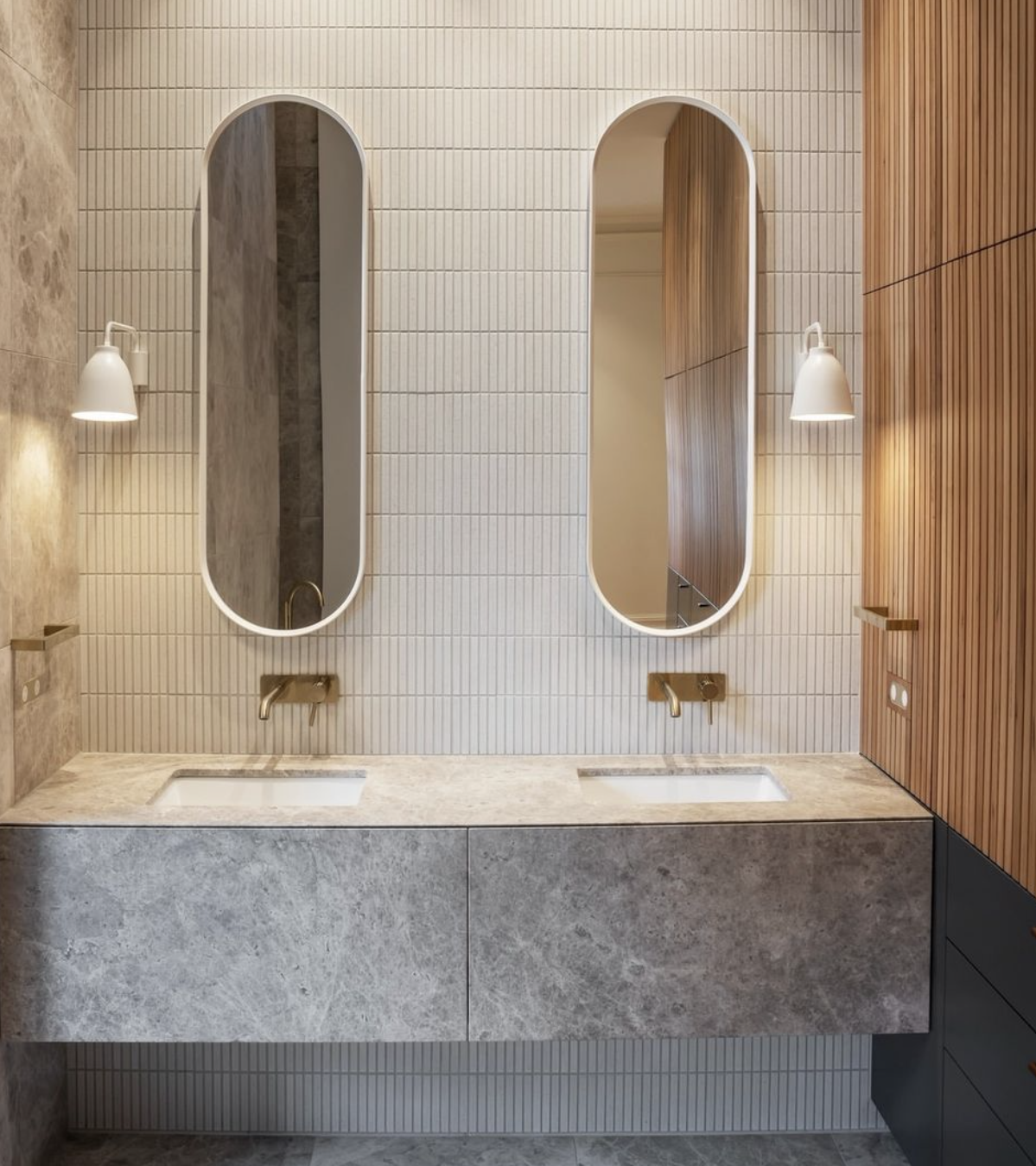
Tile rarely exists on its own. In a well-designed interior, it interacts with wood, stone, metal, glass, plaster, fabric, and other materials to create a balanced and cohesive atmosphere.
Today’s interiors increasingly combine different textures, colors, and material qualities rather than relying on a single dominant finish. This approach allows designers to create spaces that feel layered, tactile, and visually interesting.
Japanese-made tile can be particularly versatile in these compositions. Subtle glaze variations, natural Shade Variation, distinctive textures, and a wide range of shapes and finishes allow tile to play different roles within a space—from a primary surface to a quiet connecting element or a carefully placed accent.
So, how can tile be combined with other materials effectively? Here are several ways to think about material combinations when designing an interior.
Creating Warm Contrast with Wood and Tile
Different Textures, Stronger Contrast
Wood and tile have distinctly different tactile qualities. Wood feels warm and organic, while ceramic tile has a harder, more refined surface. Rather than competing with each other, these differences can create a sense of balance.
A softly textured tile paired with natural wood can make an interior feel warm without becoming overly rustic. Conversely, a clean, minimal tile can provide a crisp contrast against expressive wood grain.
This combination works particularly well in residential interiors, hospitality spaces, restaurants, and boutique environments where designers want to balance warmth with a sense of refinement.
Connecting Wood and Tile Through Color
Color is another way to create harmony between the two materials.
The goal does not necessarily have to be an exact color match. Instead, subtle relationships between tones can make the materials feel connected. Warm beige tile, for example, can work naturally with oak or walnut, while cooler gray tile can complement ash or other pale woods.

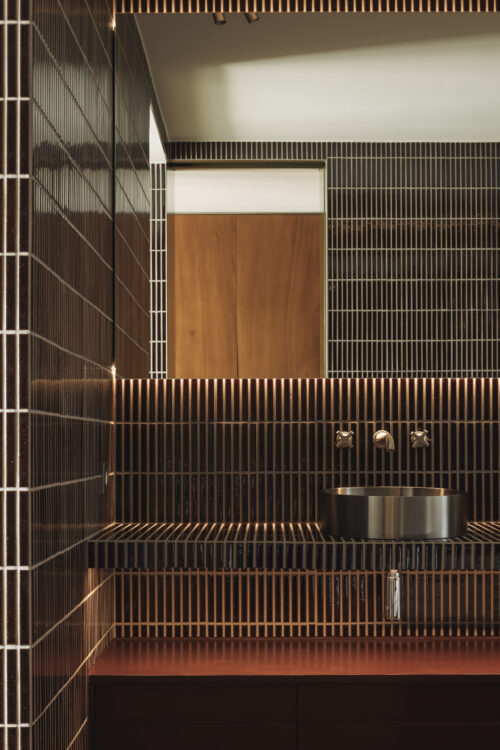 Photo provided by: Mittsu Japanese Tile
Japanese tile with subtle color variation can be especially effective because its surface does not always appear as a single, uniform color. The small differences in tone can help bridge the visual gap between tile and natural wood.
Combining Tile and Stone for a Material-Rich Interior
Stone and ceramic tile share a natural connection. Both are mineral-based materials with strong tactile qualities, making them an intuitive combination in interior design.
However, using two materials with similar visual characteristics does not mean they need to look identical.
A stone surface with a relatively rough texture can be paired with a smoother tile, while a highly textured tile can provide contrast against a more restrained stone surface. This creates visual depth without making the space feel chaotic.
Avoiding Too Much Uniformity
When combining tile and stone, it can be tempting to coordinate every element too closely. But a certain amount of difference is often what makes the combination successful.
Differences in scale, texture, gloss, and color can help define the role of each material. For example, a natural stone countertop can be complemented by a glazed ceramic backsplash, allowing each surface to have its own character.
For designers working with Japanese-made tile, glaze and Shade Variation can add another layer of contrast to stone surfaces, creating a composition that feels natural rather than overly coordinated.
Creating a Refined Look with Metal and Tile
Combining Different Qualities of Light
Metal introduces a different kind of visual character to an interior. Brass, stainless steel, bronze, and blackened metal can reflect or absorb light in ways that differ significantly from ceramic surfaces.
This difference can be used intentionally.
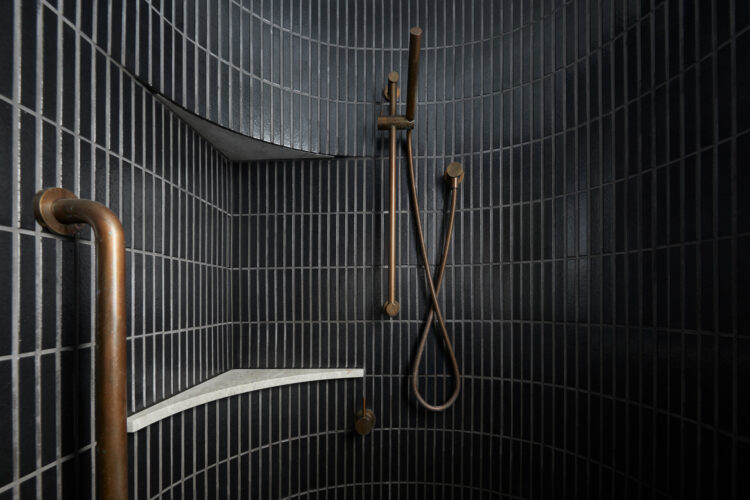 Photo provided by: Mittsu Japanese Tile
A glossy glazed tile can reinforce the reflective quality of polished metal, creating a sophisticated and luminous atmosphere. A matte or textured tile, on the other hand, can soften the stronger reflection of metal and create a more restrained look.
Balancing Gloss and Reflection
When combining tile and metal, the amount of visual reflection is important.
Using highly reflective tile together with polished metal can create a dramatic effect, but too many reflective surfaces may make a space feel visually busy. Pairing one reflective material with a more subdued surface can provide a better balance.
This is one reason surface finish should be considered together with the surrounding materials—not as an isolated tile specification.
Designing with Light Through Glass and Tile
Transparency Meets Ceramic Texture
Glass and tile create an especially interesting contrast because they express light in very different ways.
Glass can introduce transparency, reflection, and brightness, while ceramic tile provides opacity, texture, and material depth. Together, they can create a layered visual experience.
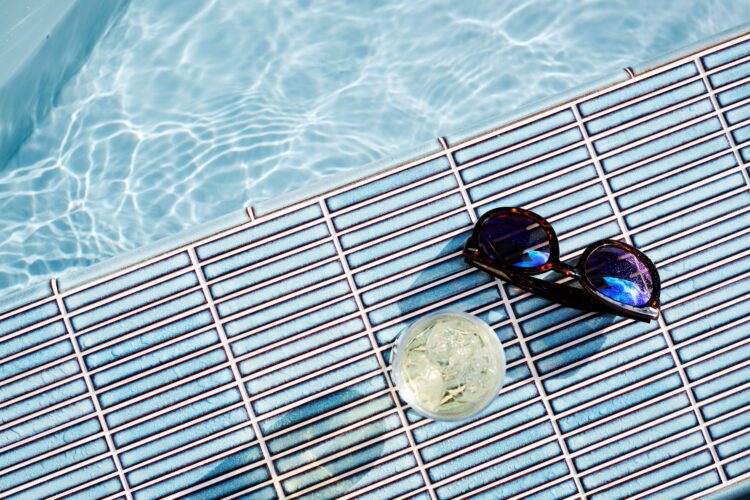
In bathrooms, hospitality spaces, restaurants, and retail interiors, even a relatively small area of glass can change how tile is perceived by reflecting or transmitting light across the surface.
Creating an Accent with a Small Area
Not every material needs to occupy a large surface area to have an impact.
A small section of textured or glazed tile can become a focal point when surrounded by more restrained materials. Glass, lighting, or metal details can then reinforce the visual effect without competing with the tile itself.
This approach can be particularly useful when working with distinctive Japanese-made tile, where the character of the material can be emphasized without covering an entire wall or floor.
Using Tile to Connect Different Materials
Creating a Visual Transition
One of the most useful roles for tile is not necessarily to dominate a space, but to connect other materials.
A tile surface can act as a transition between wood and stone, between metal and plaster, or between different areas of an interior. Its color, texture, and scale can help establish a visual relationship between materials that might otherwise feel disconnected.
This is particularly valuable in open-plan spaces, where several materials need to coexist without making the interior feel fragmented.
Letting Each Material Have a Role
Successful material combinations are not necessarily about using as many materials as possible.
A space can become visually complicated when every surface tries to attract attention. Instead, it is often more effective to decide which material should lead, which should support it, and which should provide contrast.
Tile might be the primary visual element in one project, while in another it may serve as a quiet background or a transition between other materials.
Thinking about the role of each material helps create a more intentional composition.
The Design Potential of Japanese-Made Tile
Japanese-made tile offers designers considerable flexibility when combining materials.
Its appeal is not limited to color or pattern. Glaze, surface texture, Shade Variation, shape, scale, and firing characteristics can all contribute to the way tile interacts with its surroundings.
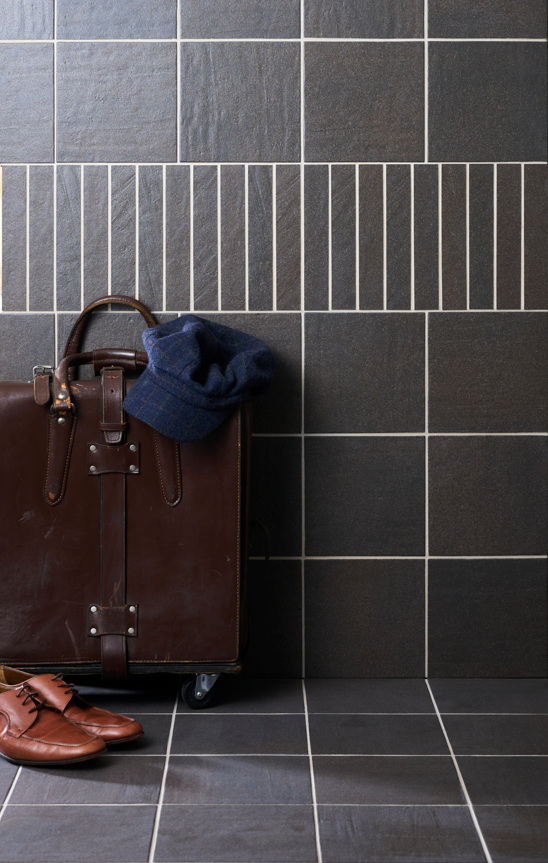
A softly varied glazed tile can add warmth to a minimalist interior. A textured tile can create contrast against smooth stone. A small-format tile can introduce rhythm alongside large wood or stone surfaces. A refined matte finish can balance polished metal or glass.
These possibilities make Japanese tile more than a surface finish. It can become part of the overall material language of an interior.
For architects and interior designers, the key is to consider tile in relation to the entire palette of materials rather than selecting it in isolation. Looking at color, texture, scale, reflectivity, and natural and artificial light together can reveal combinations that are not always obvious from a single sample.
Conclusion: Think of Materials as a Palette
Interior design is not simply about selecting beautiful individual materials. It is about understanding how those materials interact.
Wood can introduce warmth. Stone can bring natural weight and texture. Metal can add precision and reflection. Glass can introduce light and transparency. Tile can connect these elements through color, texture, scale, and surface character.
Japanese-made tile offers particularly rich possibilities because its glaze, texture, and natural variation can change subtly depending on light and surrounding materials.
By considering tile as part of a larger material palette, designers can create interiors that feel cohesive without becoming uniform—and layered without becoming visually complicated.
The most successful combinations are often not the ones where every material matches, but the ones where each material has a clear role and contributes to the character of the space.