


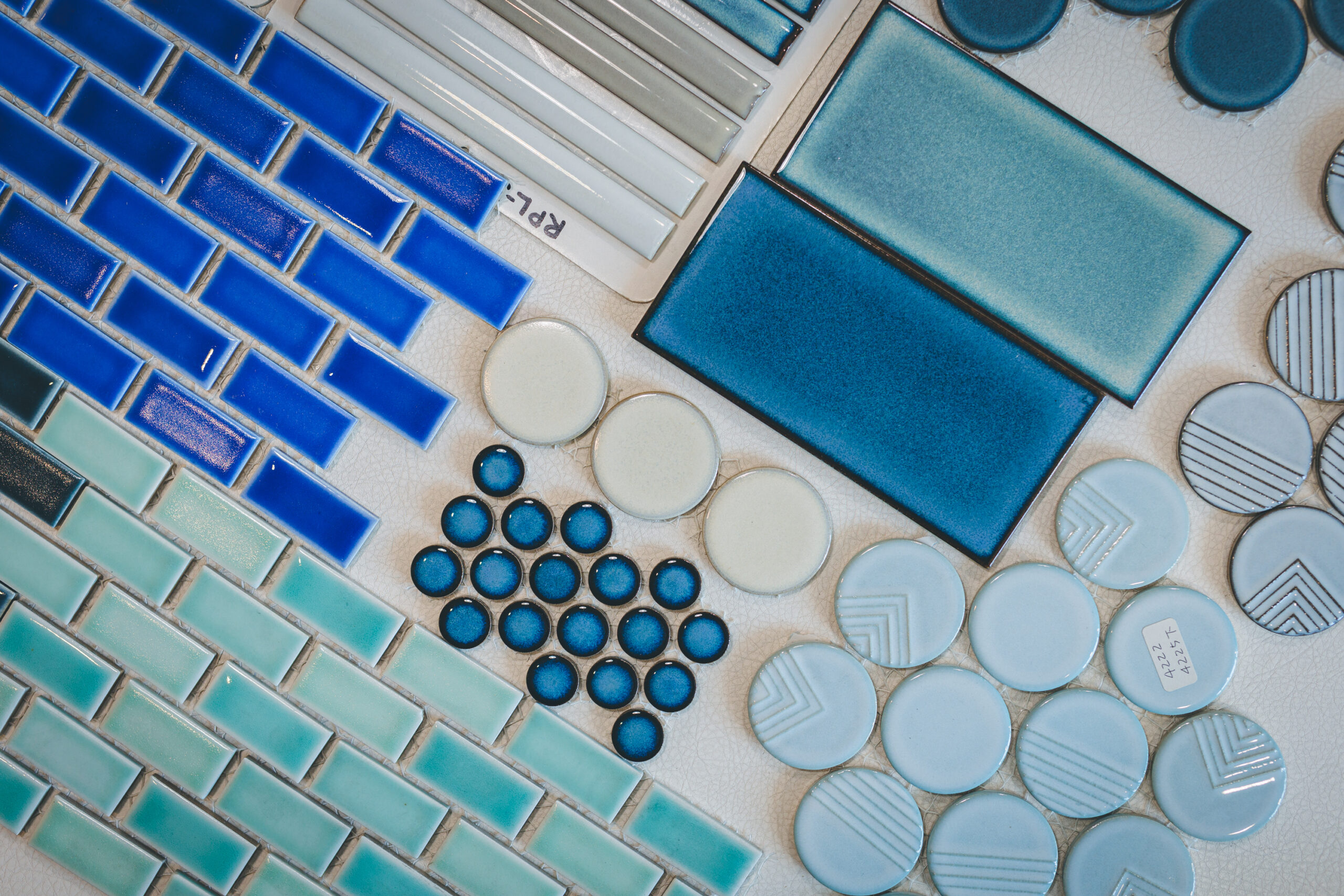
Japanese tile can bring distinctive color, texture, and material character to an architectural or interior design project. But when specifying tile for a project outside Japan, there are several practical considerations beyond appearance.
Tile dimensions, application, performance, shade variation, samples, production schedules, and international shipping can all affect the success of a project. These details are especially important when working with materials produced overseas.
For architects and interior designers considering Japanese tile, understanding these factors early in the design process can make specification and procurement much smoother.
In this article, we introduce some of the key points to consider when selecting and specifying Japanese tile for international projects.

Start with the Basic Tile Specifications
Size and Dimensions
Tile sizes can vary between markets. In the United States, dimensions such as 6″×6″ or 3″×6″ are familiar to many designers, while Japanese manufacturers may offer different dimensions and formats.
It is important to confirm the actual dimensions of the tile rather than relying only on its nominal size.
Depending on the project, designers may also need to consider:
- Actual size
- Thickness
- Dimensional tolerance
- Edge details
- Installation requirements
Understanding these specifications at an early stage can help prevent unexpected issues during installation.
Application and Suitability
A tile that looks perfect for a project is not necessarily suitable for every application.
Before specifying a product, confirm whether it is intended for:
- Walls or floors
- Interior or exterior applications
- Wet areas
- Residential or commercial projects
- Other specific environmental conditions
The appropriate requirements will depend on the location and intended use of the tile.
This is particularly important for commercial and hospitality projects, where performance requirements can be more demanding than in residential applications.
Performance and Technical Information
In addition to appearance, tile specifications may include technical characteristics such as water absorption, slip resistance, durability, and other performance criteria.
The specific requirements depend on the application and local building standards.
For this reason, technical information should be reviewed before the tile is finalized for a project—not after the design has already been approved.
A beautiful material works best when its aesthetic qualities and technical requirements are considered together.
Look Beyond a Single Sample
Understanding What a Sample Shows
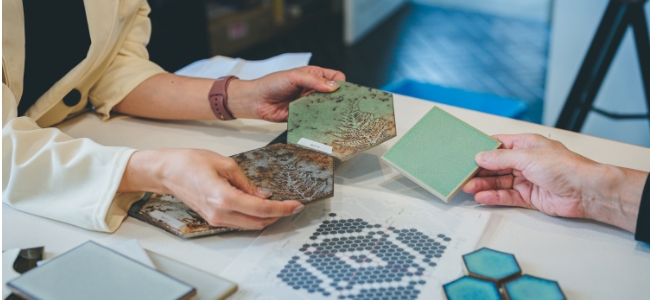
Samples are essential when selecting tile, but a single piece may not tell the entire story.
This is particularly true for tiles with Shade Variation or distinctive glaze movement.
A sample can show the basic color, surface texture, and finish, but it may not represent the full range of variation that will appear across a completed installation.
Reviewing Multiple Pieces
When a tile has moderate or substantial Shade Variation, reviewing several pieces together can provide a much better understanding of the finished appearance.
Designers may want to consider:
- The range between lighter and darker pieces
- How colors are distributed
- Glaze movement
- Surface texture
- Grout color
- Installation pattern
Looking at multiple pieces together helps designers visualize how the material will behave across a larger surface.
This is especially important for V3 and V4 tiles, where the difference between individual pieces can become an intentional part of the design.
Consider the Lighting and Location
The same tile can look very different depending on where it is installed.
Natural daylight, artificial lighting, viewing distance, surrounding materials, and even the direction of light can influence how color and texture are perceived.
A tile viewed under showroom lighting may have a different appearance from the same tile installed in a restaurant, hotel, or residence.
Whenever possible, consider the actual lighting conditions and surrounding materials when evaluating a sample.
Consider the Practicalities of an International Project
Quantity and Production Lots
Ordering tile for an international project is different from purchasing a small quantity for a local installation.
Before placing an order, it is important to determine the required quantity and consider whether additional tile may be needed later.
Production lots can also be relevant when working with tiles that have natural Shade Variation. Tile produced at a different time may show differences in color or glaze expression.
For larger projects, discussing the required quantity and production schedule with the supplier early in the process can help ensure a more consistent result.
Lead Times and Production Schedules
International projects require careful planning because the timeline extends beyond the tile manufacturer’s production schedule.
A typical process may involve:
Sample approval → Specification → Order → Production → Export → Delivery
Each stage takes time, and lead times can vary depending on whether a product is in stock or made to order.
For this reason, tile selection should ideally happen early enough in the design process to allow time for sampling, approval, production, and international transportation.
Planning ahead can be particularly important for large hospitality, commercial, and residential projects with fixed construction schedules.
Packaging and International Shipping
Tile is a durable architectural material, but it is also heavy and can be vulnerable to damage during transportation.
For international shipments, packaging, palletization, loading, and shipping conditions all need to be considered.
The logistics of moving tile from Japan to another country are therefore an important part of the specification process.
Working with a supplier experienced in international tile shipments can help coordinate these details and reduce potential issues along the way.


Working with Japanese Tile Manufacturers
Confirm Specifications Early
One of the most effective ways to avoid problems later is to confirm technical and product information early in the design process.
Before a tile is finalized, designers should have a clear understanding of its:
- Dimensions
- Thickness
- Application
- Performance characteristics
- Finish
- Shade Variation
- Availability
- Lead time
Early communication allows potential issues to be identified before the product becomes part of the final specification.
Review Samples and Production Expectations
It is also important to understand the relationship between samples and production tile.
For products with natural glaze variation or Shade Variation, the final installation is not expected to look exactly like a single sample piece.
Instead, the sample should be viewed as an indication of the material’s character and range.
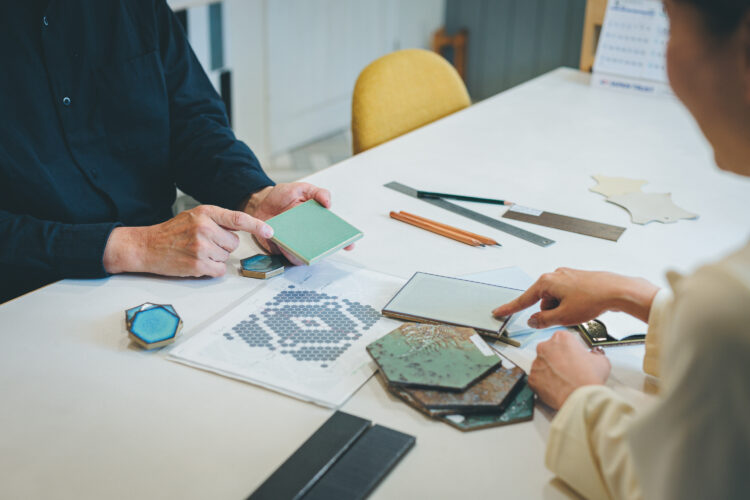
Discussing these expectations with the manufacturer or supplier in advance can help architects, designers, contractors, and clients develop a shared understanding of the finished appearance.
Work with an Experienced Tile Supplier
Japan is home to many tile manufacturers, each with its own products, production methods, specifications, and areas of expertise.
For designers outside Japan, researching and communicating with individual manufacturers can be challenging, particularly when language, product information, samples, ordering, and international logistics are all involved.
An experienced tile supplier can help bridge this gap.
Depending on the project, a specialized supplier may assist with product selection, technical information, samples, ordering, production coordination, export documentation, and shipping.
This support can make it easier for international designers to access Japanese tile while keeping the specification and procurement process organized.
Conclusion: Bringing Japanese Tile into International Projects
Japanese tile can offer international projects a distinctive combination of color, texture, material character, and ceramic craftsmanship.
But successful specification involves more than choosing a beautiful tile.
Designers should consider appearance, performance, specifications, production, and logistics as part of the same process.
Understanding Shade Variation, reviewing multiple samples, confirming technical information, planning production and lead times, and discussing international shipping requirements early can help ensure that the selected tile performs as intended from specification through installation.
With the right information and planning, Japanese tile can be both a distinctive design element and a practical choice for international architectural and interior projects.
For architects and designers, the process does not have to begin with knowing every detail about Japanese tile. The important first step is asking the right questions early—and working with manufacturers and specialized suppliers who can provide the information needed to make informed decisions.
In the next article, we will take a closer look at how glaze, finish, and texture can be selected to create different moods and material experiences in an interior space.